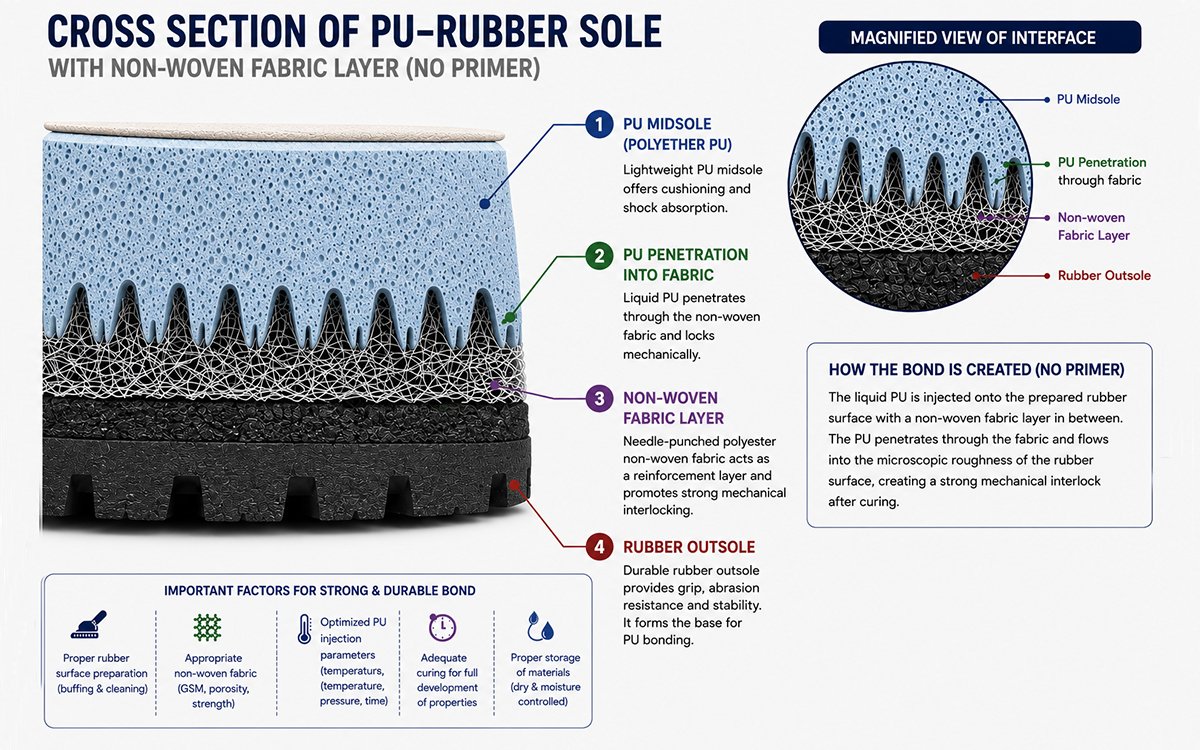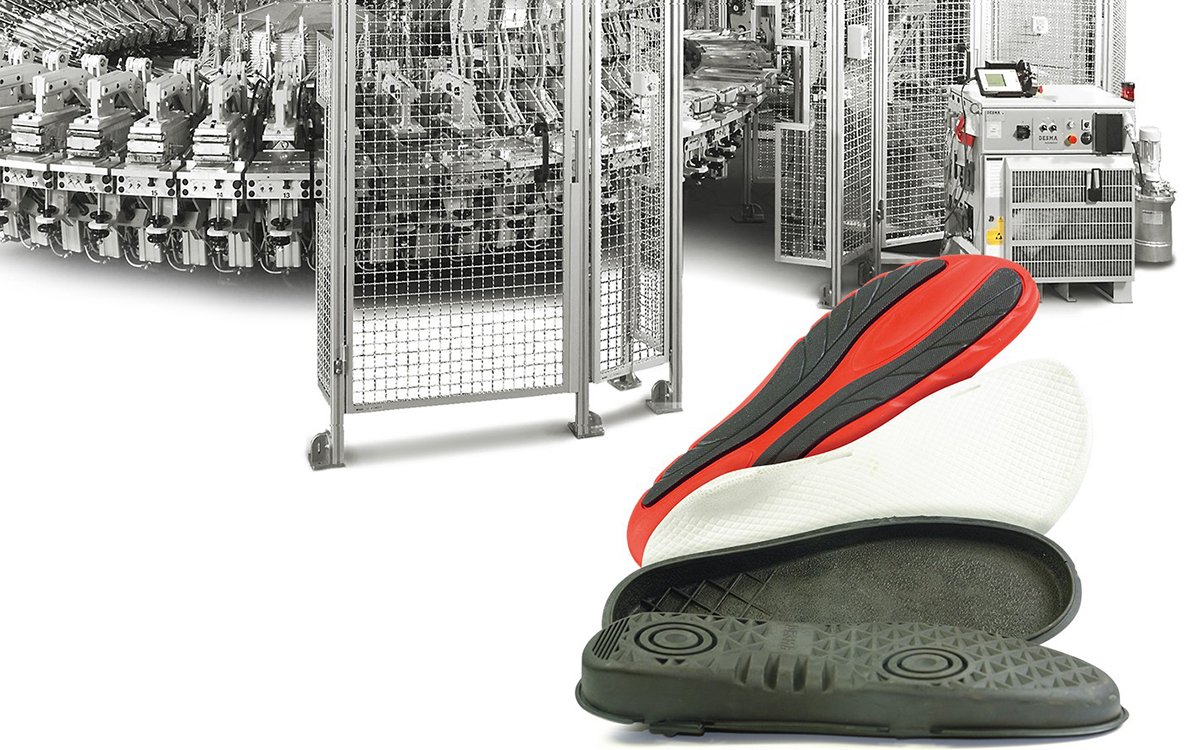




Polyurethane (PU) in Footwear Soling: Understanding the Chemistry Behind High-Performance Soles
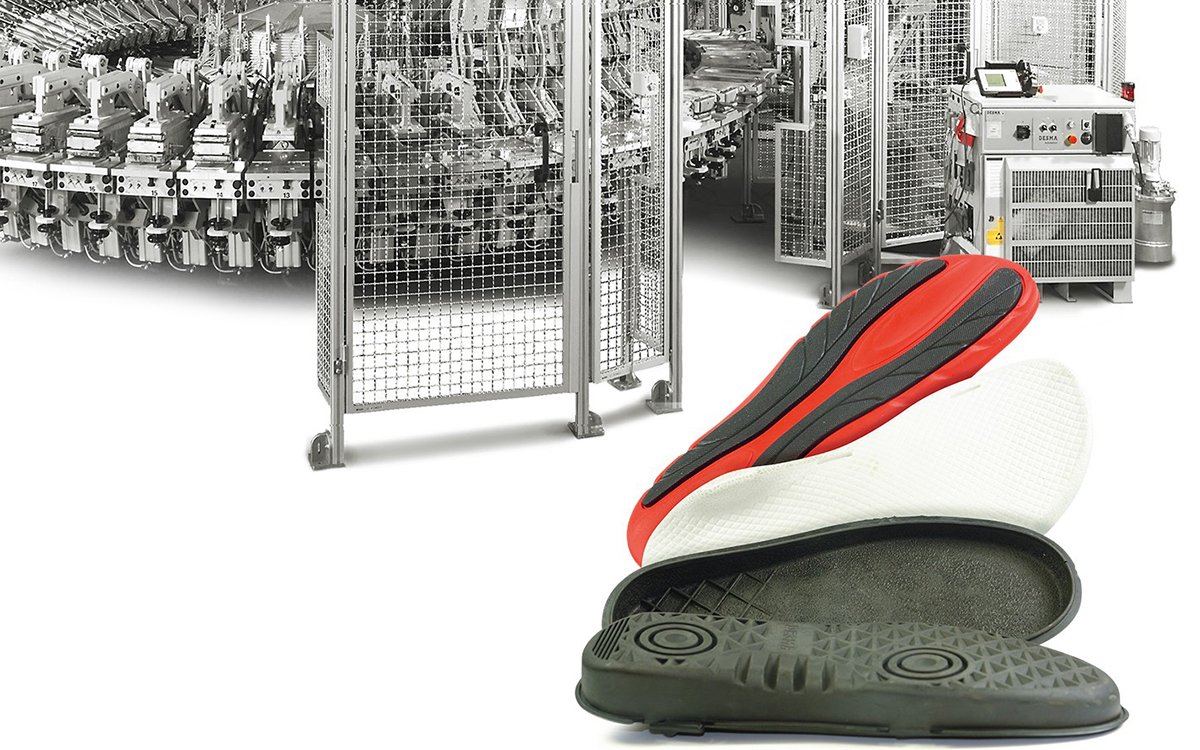
Polyurethane (PU) is one of the most widely used materials for manufacturing footwear soles due to its excellent combination of comfort, durability, flexibility, abrasion resistance, and lightweight properties. From safety shoes and sports footwear to casual and fashion footwear, PU offers exceptional versatility and performance.
Unlike many other polymers, PU is formed through a chemical reaction during the moulding process, where polymerisation and shaping occur simultaneously.
Understanding the basic chemistry of polyurethane helps footwear professionals appreciate how different formulations and processing conditions influence the performance of the finished sole.
What is Polyurethane?
Polyurethane is produced by mixing two primary chemical components:
- Isocyanate
- Polyol
When these ingredients are mixed in carefully controlled proportions, they react to form polyurethane. Unlike many other plastics, polyurethane is both formed and shaped simultaneously during the manufacturing process. This unique characteristic makes PU an ideal material for direct soling applications in the footwear industry.
Additional Ingredients
Besides isocyanate and polyol, the polyol blend usually contains several additives that influence the final properties of the PU system, including:
- Catalysts, which control the speed of the chemical reaction.
- Blowing agents, which help create the cellular structure required for lightweight soles.
- Pigments, to provide colour.
- Stabilisers and other additives, to improve processing, durability, or specific performance characteristics and desired appearance.
Maintaining the correct mixing ratio, processing temperature, and reaction time is critical for producing consistent, high-quality footwear soles.
The PU Manufacturing Process
Once the liquid Isocyanate and Polyol are accurately metered and mixed, a chemical reaction begins immediately.
During this reaction:
- The liquid mixture gradually becomes more viscous.
- Heat is generated naturally (an exothermic reaction).
- The material expands and fills the mould cavity.
- The polymer cures to form a solid PU sole.
Because the reaction proceeds rapidly, precise control of the mixing ratio, temperature, pressure, and processing time is essential for producing high-quality soles with consistent properties.
The Importance of Processing Technology
Producing an optimum PU sole involves much more than selecting quality raw materials. The final performance depends on several interconnected factors, including:
- Selection of the appropriate PU formulation.
- Accurate mixing of the chemical components.
- Processing temperatures.
- Injection and moulding parameters.
- Mould design and geometry.
- Curing conditions.
There are no universal rules for producing the perfect PU sole. Success depends on selecting the right combination of materials and processing technology for the intended footwear application.
Selecting the Right Polyurethane System
The selection of a polyurethane system begins by identifying the performance requirements of the footwear, such as:
- Comfort
- Flexibility
- Abrasion resistance
- Slip resistance
- Chemical resistance
- Hydrolysis resistance
- Density
- Hardness
- Durability
Once these requirements are established, suitable PU systems can be evaluated.
Since polyurethane properties are heavily influenced by both chemical composition and manufacturing conditions, consultation with experienced raw material suppliers and processing specialists is often recommended during product development.
Basic Polyurethane Chemistry
The simplest polyurethane is formed when a polyol reacts with an isocyanate.
Isocyanate + Polyol → Polyurethane
However, the chemistry is more complex than this simplified equation.
Isocyanates can react with several different chemical groups, creating polymers with widely varying structures and properties. As a result, every reactive component included in the formulation influences the characteristics of the finished material.
The selection of raw materials ultimately determines whether the polyurethane becomes:
- Soft and flexible
- Tough and resilient
- Rigid and structural
- Microcellular or compact
This versatility is one of the reasons polyurethane has become such an important material in footwear manufacturing.
Cross-Linking and Its Effect on Performance
During curing, polyurethane molecules join together to form a three-dimensional network known as cross-linking.
The degree of cross-linking—commonly referred to as cross-link density—has a significant influence on the final properties of the material.
Generally:
- Lower cross-link density produces softer and more flexible polyurethane, suitable for cushioning and comfort.
- Moderate cross-link density provides a balanced combination of flexibility, durability, and resilience for everyday footwear.
- Higher cross-link density results in harder, more rigid polyurethane with improved dimensional stability and chemical resistance.
Selecting the appropriate cross-link density is essential for achieving the desired balance of comfort, durability, and performance.
Conclusion
The quality and performance of a PU footwear sole are determined not only by the raw materials used but also by the formulation, processing conditions, mould design, and curing process. Careful control of each stage of production ensures that the finished polyurethane sole delivers the required levels of comfort, durability, flexibility, and long-term performance.
A sound understanding of polyurethane chemistry enables footwear designers, engineers, and manufacturers to select the most appropriate PU system for each application and produce high-quality footwear that meets both performance and customer expectations.
| Expert Insight: Even when the same raw materials are used, small variations in mixing ratio, temperature, processing conditions, or mould design can significantly influence the quality and performance of the finished PU sole. Consistent process control is therefore essential for achieving reliable, repeatable production. |
 Category :
Materials and Components,
Manufacturing and Technology,
Category :
Materials and Components,
Manufacturing and Technology,

Quick Poll
Which property do you consider the most important when selecting a PU sole for footwear?

About: Prem Mehani
Prem Mehani is a footwear industry professional with extensive experience in footwear materials, testing, quality standards, and safety footwear. He regularly writes on footwear technology, standards, and consumer awareness.

Ask the Expert
Your email address will not be published.