



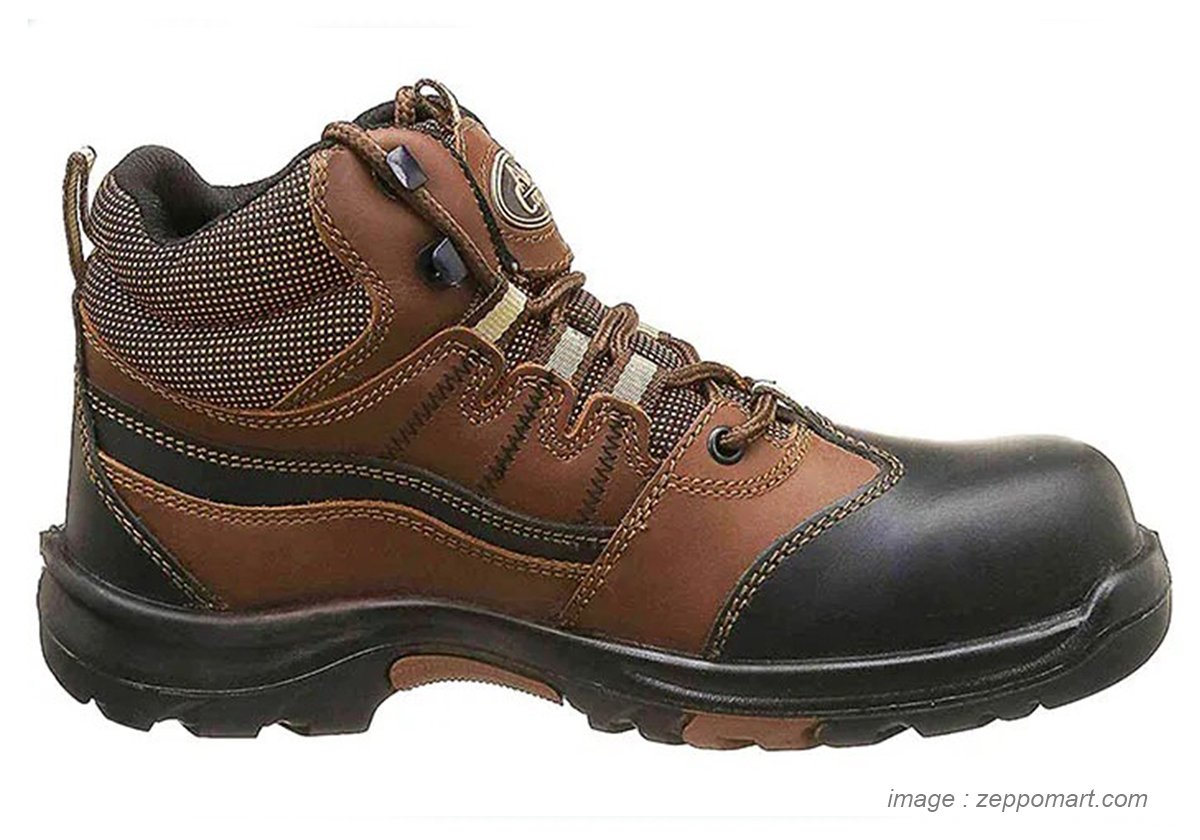
Safety footwear also known as Steel Toe Shoes or Work Boots or Safety Shoes or Safety Boots refers to a category of shoes and boots designed to protect the feet from various hazards in work environments. These hazards can include impact, compression, punctures, slips, chemical exposure, electrical hazards, and extreme temperatures. Safety footwear is commonly used in industries such as construction, manufacturing, mining, logistics, and other sectors where workers may be exposed to dangerous conditions. Safety shoes are effective in keeping the feet of industrial workers safe from sharp and heavy objects while working in factories.
Key Features of Safety Footwear
a. Steel Toe: The most traditional form of toe protection, made from steel and designed to withstand heavy impacts and compression.
b. Composite Toe: Made from non-metal materials such as Kevlar, carbon fiber, or plastic. These do not conduct electricity or cold, making them suitable for environments where metal is not allowed.
c. Aluminum Toe: A lighter alternative to steel toe caps, providing similar protection but with slightly less weight.
2. Slip-Resistant Soles: Designed to prevent slips and falls, particularly in wet or oily environments. These soles are often made from PU, rubber or other materials that provide good traction.
3. Puncture-Resistant Midsoles: Safety footwear may include a puncture-resistant midsole layer, typically made of steel or a composite material like Kevlar, to protect against sharp objects like nails or glass.
4. Electrical Hazard Protection: Some safety footwear is designed to provide insulation from electrical shocks, which is crucial in environments where workers are exposed to live wires or electrical equipment.
5. Chemical Resistance: Certain safety footwear is made from materials that resist corrosive substances, providing protection for workers in chemical manufacturing or handling.
6. Waterproofing and Insulation: Safety boots may include waterproof materials and insulation to protect against water and extreme temperatures, making them suitable for outdoor or cold environments.
7. Metatarsal Guards: Additional protection that extends over the top of the foot to protect the metatarsal bones from impact injuries.
Types of Safety Footwear
a. Work Boots: These are the most common type of safety footwear, offering various protections like toe caps, slip-resistant soles, and waterproofing.
b. Safety Shoes: Similar to work boots but usually designed with a lower cut, making them lighter and more suitable for less hazardous environments.
c. Electrical Hazard (EH) Boots: Designed to reduce the risk of electrical shock for those working around live electrical circuits or machinery.
d. Chemical-Resistant Boots: Made with materials that protect against chemical spills and are often used in laboratories, chemical plants, or other industries involving hazardous substances.
Standards and Certifications
Safety footwear must often meet specific standards to be used in certain industries. In India, safety footwear must meet the IS:15298 standard, which categorises safety footwear based on level of protection provided. All safety footwear manufactured and sole in India must bear ISI mark under licence from Bureau of Indian Standards (BIS).
In the United States, the Occupational Safety and Health Administration (OSHA) requires safety footwear to meet standards set by ASTM International. In Europe, safety footwear must meet the EN ISO 20345 standard, which categorizes safety footwear based on the level of protection provided.
References:


Email ID
Mobile Number
Subscribe to Newsletter
