



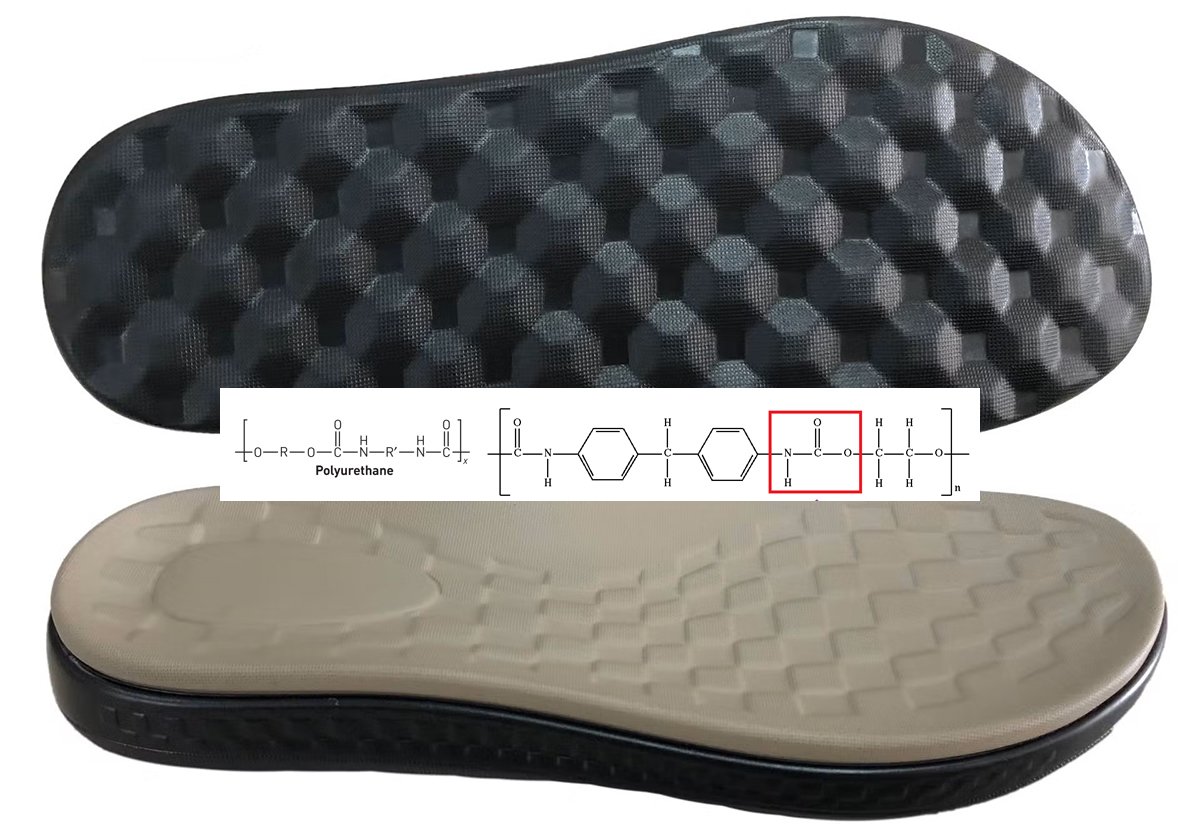
Polyurethane (PU) is a versatile synthetic polymer produced by the chemical reaction of polyols and isocyanates. It is one of the most widely used materials in the footwear industry due to its excellent combination of lightweight properties, flexibility, durability, abrasion resistance, and cushioning.
Depending on its formulation, PU can be manufactured as a soft foam, rigid foam, elastomer, adhesive, coating, or solid plastic, making it suitable for a wide range of footwear applications.
Polyurethane was first developed in 1937 by German chemist Otto Bayer. Today, it has become one of the most important materials used in modern footwear manufacturing.
PU is created through a polymerization reaction between two primary chemicals:
Polyol – provides flexibility, softness, and resilience.
Isocyanate – provides strength, toughness, and chemical resistance.
When these chemicals are mixed in predetermined proportions, they react to form polyurethane. By changing the type and ratio of the ingredients, manufacturers can produce PU with different densities, hardness levels, and mechanical properties to suit various footwear applications.
Unlike many other plastics, polyurethane can be engineered to behave like soft foam, rubber, leather, or rigid plastic, making it one of the most adaptable materials in footwear.
Uses of PU in Footwear Components
1. Soles: PU is extensively used for
Outsoles
Midsoles
Single-density soles
Double-density safety soles
It provides excellent comfort, flexibility, and durability.
2. Insoles: Soft PU foams are used in insoles to improve
Cushioning
Comfort
Shock absorption
3. Uppers: PU-coated fabrics and synthetic PU leather are widely used as alternatives to genuine leather.
4. Adhesives: PU adhesives provide strong bonding between
Upper and sole
Leather and rubber
PU and EVA
Textile materials
5. Coatings: PU coatings improve
Water resistance
Scratch resistance
Appearance
Surface durability
Interesting Fact
A modern pair of direct-injected PU safety shoes can often be manufactured in a single moulding operation, where the polyurethane sole chemically bonds to the upper without requiring separate adhesives. This process produces a strong, durable bond and improves manufacturing efficiency.


Email ID
Mobile Number
Subscribe to Newsletter
